Why Choose Solar Energy Panels for Global Buyers?

For global buyers, solar energy panels offer a practical way to produce electricity closer to where it is used. A warehouse in Kenya, a home in Spain, or a clinic in rural Australia may all benefit from the same basic technology. Yet their needs will differ. Sunlight, roof design, local weather, electricity prices, and grid reliability shape every purchasing decision.

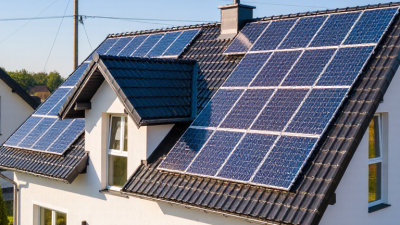
The strongest buying choices begin with evidence, not attractive brochures. Buyers should examine panel efficiency, temperature performance, degradation rates, warranty terms, and independent test results. Recognized certifications can support quality and safety, but certification requirements vary between markets. Professional installers can also check roof loading, cable routes, inverter compatibility, and local electrical rules. Small details matter. A shaded chimney can reduce output across an entire panel string.

Solar energy panels can lower long-term energy costs and reduce dependence on fossil-fuel-based electricity. They may also support cleaner operations for factories, farms, schools, and homes. However, they are not a perfect answer. Upfront costs, cloudy seasons, battery replacement, shipping delays, and limited recycling systems require realistic planning. Real projects are messier. A reliable supplier should explain expected production using local weather data, not promise identical results everywhere. Global buyers gain more confidence when they compare technical documents, installation experience, after-sales support, and total ownership costs. The best decision is rarely the cheapest quote; it is the option that remains dependable under local conditions.
Why Choose Solar Energy Panels for Global Buyers?

Solar Energy Panels: Definition and Core Operating Principles

Solar Energy Panels: Definition and Core Operating Principles

Solar energy panels are devices that convert sunlight into electricity through the photovoltaic effect. Most panels use semiconductor cells, commonly crystalline silicon. When photons strike these cells, they release electrons and create direct current. An inverter then converts that electricity into alternating current for household appliances or commercial systems.

The physics is simple. Yet panel performance depends on cell quality, wiring, temperature, and installation design.

According to the International Renewable Energy Agency’s Renewable Capacity Statistics 2024, global solar capacity reached approximately 1,419 gigawatts by the end of 2023. Solar added nearly 346 gigawatts that year, revealing strong worldwide demand.

For global buyers, the operating environment matters as much as the rated wattage. Output changes with sunlight intensity, roof angle, shading, dust, and local temperature. Shade changes everything. A hot panel may produce less electricity than its laboratory rating suggests.

The International Energy Agency’s Renewables 2024 report projects solar photovoltaics and wind will provide most new renewable capacity through 2030. That forecast supports long-term market confidence, but it does not remove practical risks.

The National Renewable Energy Laboratory’s review found a median photovoltaic degradation rate near 0.5% annually. A datasheet is not a roof. Buyers should check climate compatibility, certification, inverter standards, maintenance access, and grid requirements. Even careful estimates can fail when dust, weak installation practices, or unusual weather are ignored.

How Solar Panels Convert Sunlight into Usable Electricity

Why Choose Solar Energy Panels for Global Buyers?

Solar panels turn sunlight into electricity through the photovoltaic effect. Each cell uses semiconductor layers to release electrons when photons strike its surface. Sunlight becomes current. The physics is elegant, but the system needs several stages.

Panels produce direct current, or DC. An inverter then changes DC into alternating current for household appliances and commercial equipment. A monitoring system measures voltage, temperature, and daily yield. Batteries can store surplus energy for evening use, while a grid connection can absorb excess production. According to the International Energy Agency’s Renewables 2024 report, solar photovoltaic power is expected to provide about 80% of global renewable capacity growth through 2030. That expansion reflects falling costs and practical deployment, not just environmental ambition.

Real roofs are less predictable. Dust, shade, heat, cable resistance, and panel angle reduce output. The International Renewable Energy Agency reported about 346 gigawatts of solar capacity additions in 2023, bringing global solar capacity near 1.4 terawatts. Yet installed capacity is not the same as delivered electricity. Buyers should examine temperature coefficients, inverter efficiency, degradation rates, and local sunlight data. A panel rated at peak power may produce less at noon on a hot roof. That detail is often overlooked. Careful system sizing remains necessary, and even good estimates contain uncertainty.

Why Choose Solar Energy Panels for Global Buyers? - How Solar Panels Convert Sunlight into Usable Electricity

Conversion Stage How It Works Key Physical or Electrical Principle Representative Data Value for Global Buyers
1. Sunlight Reception Solar radiation reaches the photovoltaic module and supplies energy to the cells. Solar irradiance is the available power from sunlight per unit of surface area. 1,000 W/m² is the standard test irradiance used for many module ratings under AM1.5G conditions. Actual output varies with location, season, cloud cover, shading, panel orientation, and installation angle.
2. Photon Absorption Photons with sufficient energy are absorbed by the semiconductor, creating mobile charge carriers. Crystalline silicon has a band gap of approximately 1.12 eV at room temperature. Photons below the band-gap energy are not absorbed effectively, while excess photon energy is mainly converted into heat. Semiconductor selection influences efficiency, temperature behavior, manufacturing requirements, and system cost.
3. Charge Separation The cell’s electric field separates electrons and holes and drives them toward opposite electrical contacts. The photovoltaic effect produces a voltage when light generates and separates charge carriers. A single silicon cell typically produces approximately 0.5–0.7 V under operating conditions. Cells are connected in series and parallel to obtain the voltage and current required by the system.
4. Direct-Current Output Metal contacts collect the electrons and deliver electricity as direct current (DC). Electrical power is calculated as P = V × I, where P is power, V is voltage, and I is current. Module power ratings are commonly expressed in watts-peak (Wp) under standardized test conditions. Buyers should compare rated power together with dimensions, weight, operating temperature range, and warranty terms.
5. DC-to-AC Conversion An inverter converts variable DC electricity from the array into alternating current (AC) for buildings or the grid. Power electronics regulate voltage, frequency, grid synchronization, and protection functions. Modern grid-connected inverters commonly achieve approximately 95–99% peak conversion efficiency, depending on design and operating conditions. Inverter compatibility, local grid standards, voltage requirements, and certification are essential for international projects.
6. Usable Electricity AC electricity supplies household, commercial, industrial, or agricultural loads; excess energy may be exported or stored. System output depends on solar resource, installed capacity, losses, and operating conditions. Total system losses may include temperature, wiring, inverter, mismatch, soiling, shading, and availability losses. Energy-yield estimates should use local solar irradiation data rather than module nameplate capacity alone.
Typical Module Efficiency Only part of the incident solar energy becomes electrical energy; the remainder is reflected, transmitted, or converted to heat. Efficiency equals electrical output divided by incident solar power. Commercial crystalline-silicon modules commonly fall within approximately 19–23% efficiency, depending on technology and product design. Higher efficiency can reduce roof or land area requirements, while cost per watt and energy yield remain important comparison factors.
Temperature Effect As cell temperature rises, voltage generally decreases and module power output declines. Power temperature coefficients describe the percentage change in maximum power per degree Celsius. Crystalline-silicon modules commonly have a power temperature coefficient of approximately −0.3% to −0.5% per °C. Hot climates require attention to ventilation, mounting design, thermal performance, and realistic annual-yield calculations.
Long-Term Performance Output gradually decreases because of material aging, environmental exposure, and operating stress. Degradation is measured as the annual percentage reduction in power capability. Typical crystalline-silicon module degradation is approximately 0.2–0.5% per year, depending on construction and conditions. Long service life can improve lifecycle economics, especially where installation and replacement costs are significant.
Expected Service Life Modules continue producing electricity for decades when properly installed and maintained. Durability depends on encapsulation, frame design, mechanical loading, moisture resistance, and environmental conditions. A planning life of approximately 25–30 years is commonly used for crystalline-silicon photovoltaic systems. Global buyers should review climate suitability, wind and snow loads, corrosion resistance, installation quality, and maintenance access.
Environmental and Site Factors Dust, snow, salt mist, humidity, high winds, hail, and partial shading can reduce energy production or increase maintenance needs. Soiling and shading reduce the irradiance received by active cell areas and may create mismatch losses. Energy yield is site-specific; identical rated systems can produce substantially different annual electricity in different climates. Site surveys, local weather data, cleaning plans, drainage, mounting structures, and compliance requirements should be assessed before purchase.

Data ranges are representative industry values for crystalline-silicon photovoltaic systems and can vary with technology, climate, system design, and operating conditions.

Key Benefits of Solar Energy Panels for Global Buyers

Solar energy panels offer global buyers a practical way to reduce electricity costs and improve energy security. IRENA’s Renewable Capacity Statistics 2024 reported 1,419 GW of installed solar capacity worldwide by the end of 2023. Solar also represented about 73% of new renewable capacity added that year. This rapid growth reflects falling equipment costs, broader technical experience, and stronger international supply chains.

Lazard’s Levelized Cost of Energy Analysis, Version 17.0 estimated utility-scale solar costs at roughly 29–92 US dollars per megawatt-hour without subsidies. Actual savings still depend on sunlight, electricity prices, financing, and installation quality. Buyers should compare temperature coefficients, inverter efficiency, degradation rates, and warranty conditions. Small technical differences matter over twenty-five years.

The environmental benefit is measurable. The IPCC’s Sixth Assessment Report places solar power’s median lifecycle emissions near 48 grams of CO2 equivalent per kilowatt-hour, far below coal generation. Panels can also support factories, farms, warehouses, and remote facilities with limited grid access. Yet solar is not perfectly simple. Output changes with clouds and seasonal daylight, while batteries and grid upgrades can increase project costs. A careful buyer should inspect roof strength, local irradiance data, certification records, recycling arrangements, and after-sales support before approving a large order.

Factors to Compare Before Purchasing Solar Panels

Why Choose Solar Energy Panels for Global Buyers?

Choosing solar panels requires more than comparing advertised wattage. Start with your local sunlight, roof direction, seasonal temperatures, and available installation space. A 450-watt panel may look attractive, but output can fall in extreme heat or partial shade. Check the temperature coefficient, efficiency rating, and low-light performance. These details often matter more than peak power.

Tips: Request independent test reports, product datasheets, and clear warranty terms. Confirm that the panels meet recognized safety and performance standards in your country. Compare degradation rates, because gradual output loss affects long-term value. Also examine the inverter, mounting system, and installer qualifications. A reliable panel can perform poorly with incorrect wiring or weak roof supports. Ask about replacement procedures, spare parts, and technical service before purchasing internationally.

Global buyers should also compare shipping protection, import requirements, grid compatibility, and local repair access. Salt air near coastlines demands strong corrosion resistance. Snowy regions need suitable mechanical-load ratings. Dusty locations may require easier cleaning and a wider maintenance plan. Do not trust impressive claims without evidence. Some specifications are measured under ideal laboratory conditions, not on a hot rooftop. A careful comparison may reveal that the cheapest option costs more over time. It is worth questioning the assumptions behind every quotation.

Installation, Maintenance, and Long-Term Performance Considerations

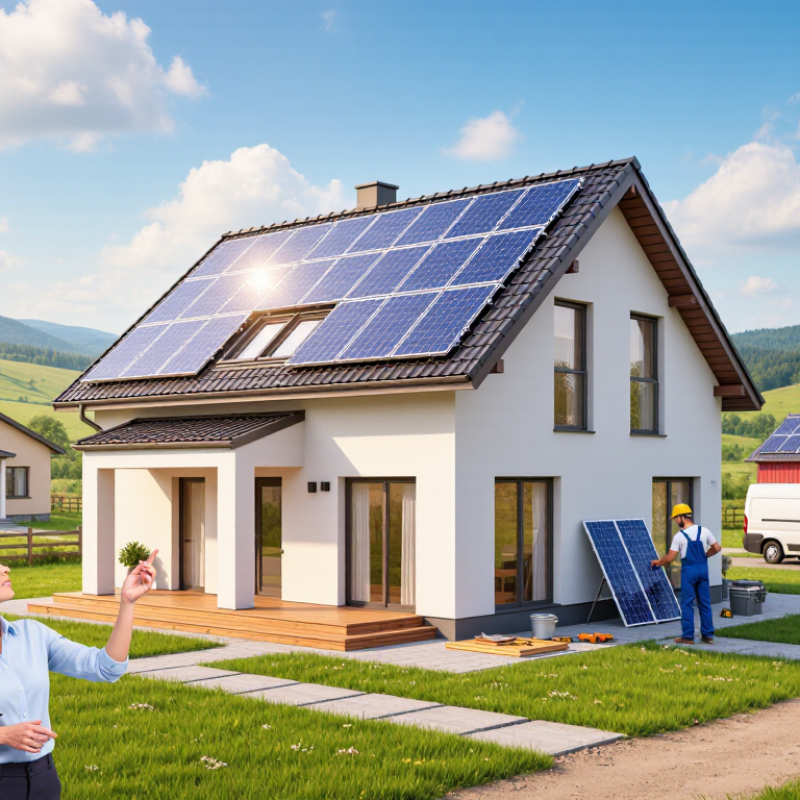
For global buyers, solar panels are only as reliable as their installation. Roof angle, wind exposure, snow load, and local heat all affect output. A qualified installer should check structural strength, shading, cable routes, and drainage before mounting panels. IEC 61215 and IEC 61730 certification can help verify module durability and electrical safety. Installation errors remain expensive. A loose connector can create heat, losses, or fire risk.

Maintenance is usually light, but it is not zero. Dust, bird deposits, salt air, and fallen leaves can reduce production. The IEA PVPS Trends 2024 report shows global solar capacity has expanded rapidly, making operational quality increasingly important.

NREL research reports a median panel degradation rate of about 0.5% annually. Therefore, buyers should request performance records, warranty terms, and realistic output estimates.

IRENA’s Renewable Power Generation Costs report also confirms that solar costs remain competitive, but poor maintenance can weaken long-term savings. A perfect forecast is impossible. Local weather always surprises.

Tips:

  • Photograph the installation before closing the project.
  • Keep inverter readings and cleaning dates in a simple log.
  • Inspect panels after severe storms.
  • Use clean water and soft tools, not abrasive chemicals.
  • Ask for thermal inspection when unexplained output declines appear.
  • In hot regions, allow ventilation beneath panels.
  • In coastal areas, check corrosion-prone fasteners regularly.
  • A small annual inspection may prevent a much larger repair.