Top 10 Things to Know Before Getting Solar Panels?
Getting solar panels can look simple from the driveway: panels on the roof, lower bills, and cleaner electricity. The real decision starts with the home, not the equipment. Roof age, shade, electricity use, local utility rules, and financing can all change the numbers. Small details matter. A chimney shadow at noon may affect production differently from a tree that shades the roof late in the day. Your own bills are a better starting point than a neighbor’s savings estimate.
Industry data shows why careful planning matters. The Solar Energy Industries Association and Wood Mackenzie reported that solar supplied 55% of new U.S. electricity-generating capacity added in 2023, in their U.S. Solar Market Insight 2023 Year in Review. That growth signals a mature, expanding market, but it does not guarantee the same value for every household. The U.S. Department of Energy’s homeowner guidance recommends assessing roof condition, energy needs, and installer proposals before committing. Ask for estimated annual production, equipment warranties, and the assumptions behind projected savings. Compare more than the monthly payment.
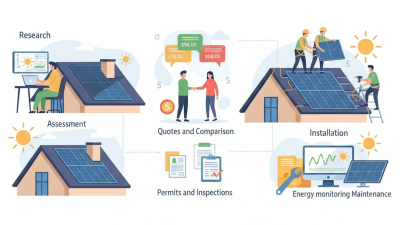
This guide covers ten practical questions to consider before signing a contract, from roof readiness and system sizing to batteries, maintenance, and installer credentials. Keep in mind that estimates are still estimates. Utility rates and household habits can change, and some savings projections may feel more certain than they really are. A clear proposal should explain its limits, not just its best-case outcome.
Assess Roof Suitability: NREL Estimates 1,118 GW of U.S. Rooftop Solar Potential
Top 10 Things to Know Before Getting Solar Panels?
The National Renewable Energy Laboratory estimates 1,118 gigawatts of potential from U.S. rooftop solar. That figure is enormous, but it is not a promise for every house. It represents technical potential across many rooftops, while your usable area may be much smaller. Roof shape, orientation, shading, and local weather all change the calculation.
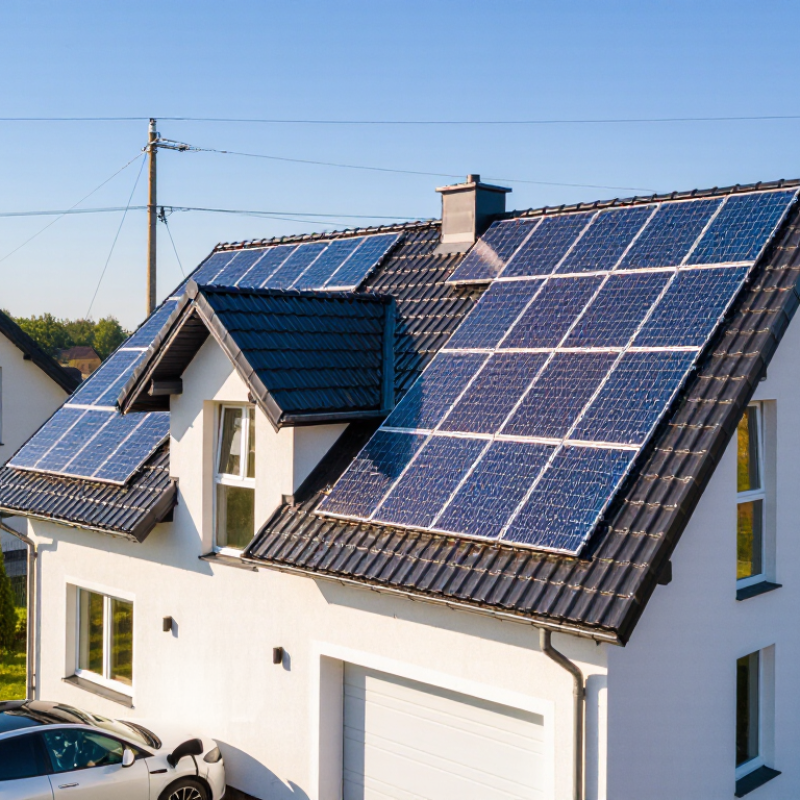
Start with a careful roof assessment. A professional should check structural strength, roof age, surface condition, and available installation space. Shade matters. Chimneys, nearby trees, and taller buildings can reduce production during important daylight hours. A south-facing roof often performs well, but east- and west-facing sections may also work. Measure twice.
Your electricity use matters as much as your roof. Review twelve months of utility bills and compare seasonal demand. Ask how the system will connect to the grid, whether local permits are required, and how exported electricity is credited. These details vary by location and can affect the financial outcome.
Real roofs differ. An online estimate may miss weak decking, hidden leaks, or afternoon shade. I would not approve a design from satellite images alone. A site visit can expose inconvenient truths before equipment arrives. The national estimate shows impressive opportunity, yet careful inspection determines whether your home can use it safely and effectively.
Size the System to Your Usage: U.S. Homes Use About 10,800 kWh per Year
A well-sized solar system starts with your electricity use, not your roof size. The average U.S. home uses about 10,800 kilowatt-hours each year. That figure is only a reference point, not a personal target. Check twelve months of utility bills before requesting proposals. Look for seasonal changes, especially higher summer use from air conditioning.
A household using 900 kilowatt-hours monthly may need a different system than one using the same annual total unevenly. A qualified installer should review local sunlight, roof direction, shading, panel layout, and system losses. Small shadows from trees can reduce production more than many homeowners expect. Leave room for future needs, such as an electric vehicle or heat pump. Do not size for appliances you may never purchase.
Use realistic numbers. A production estimate should account for cloudy days, roof aging, and occasional maintenance. My first instinct would be to maximize the roof, but that can create unnecessary expense when electricity demand is modest. Oversizing may also complicate payback calculations. Ask how the estimate was calculated and compare it with your actual bills. A clear proposal should show expected annual production, assumptions, equipment capacity, and how much grid electricity may remain. Estimates are never perfect. That is worth remembering.
Top 10 Things to Know Before Getting Solar Panels? - Size the System to Your Usage: U.S. Homes Use About 10,800 kWh per Year
| # |
Sizing Factor |
Example Data |
What It Means for Your Solar System |
| 1 |
Typical annual household electricity use |
About 10,800 kWh per year |
A useful starting benchmark for a U.S. household; your own utility bills provide a better estimate. |
| 2 |
Average monthly use at that benchmark |
About 900 kWh per month |
Calculated by dividing 10,800 kWh by 12. Actual monthly use can vary with weather, occupancy, and appliance use. |
| 3 |
Average daily use at that benchmark |
About 29.6 kWh per day |
Calculated by dividing 10,800 kWh by 365. Solar production is not constant each day or throughout the year. |
| 4 |
System size at a lower annual solar yield |
About 9.0 kW DC at 1,200 kWh per kW per year |
Illustrative size for producing roughly 10,800 kWh annually where each installed kW yields about 1,200 kWh per year. |
| 5 |
System size at a middle illustrative yield |
About 7.7 kW DC at 1,400 kWh per kW per year |
Calculation: 10,800 ÷ 1,400 = 7.7 kW. This is an example, not a universal U.S. system size. |
| 6 |
System size at a higher annual solar yield |
About 6.8 kW DC at 1,600 kWh per kW per year |
Higher annual production per installed kW can reduce the capacity needed for the same energy target. |
| 7 |
Approximate module count for the middle example |
About 20 modules rated at 400 W each |
7.7 kW ÷ 0.4 kW per module is about 19.3, rounded to approximately 20 modules. Actual module ratings vary. |
| 8 |
Annual energy-offset target |
100% of 10,800 kWh = 10,800 kWh per year |
Choose an offset target based on your goals. A system sized for 100% annual use may still import electricity at night or in low-production periods. |
| 9 |
Usage data to collect before sizing |
Preferably 12 months of electricity bills |
A full year helps reveal seasonal changes and gives a more reliable annual kWh total than a single bill. |
| 10 |
Site conditions that change actual output |
Location, roof direction, tilt, shading, and system losses |
These factors affect annual production per kW. A site-specific production estimate is needed before choosing final system capacity. |
Planning note: The production yields above are illustrative assumptions used to show the sizing calculation. Actual output varies by site and system design. Estimate system capacity with: annual electricity use (kWh) ÷ expected annual production per installed kW (kWh/kW).
Compare Installation Costs: NREL Benchmarks Residential Solar at $2.90 per Watt
Before requesting quotes, translate the NREL benchmark into a usable number. NREL’s residential solar cost analysis places installation near $2.90 per watt, before incentives. An 8-kilowatt system would therefore indicate roughly $23,200 in upfront cost. That figure includes equipment, labor, permitting, design, and other soft costs. It is a benchmark, not a guaranteed offer.
Local conditions can move the price quickly. A steep roof, long conduit runs, electrical-panel upgrades, or difficult site access may add thousands. The Department of Energy’s solar market reporting also shows meaningful price differences between regions and system sizes. Larger systems often have lower costs per watt. Smaller systems can look surprisingly expensive.
Ask for an itemized proposal. Look for the system size, estimated annual production, roof work, permit fees, and warranty terms. Financing deserves separate attention. A low monthly payment can hide interest and dealer charges. Check the cash price first. Then compare the financed total.
My practical concern is simple: many homeowners compare only the headline price. That can distort the decision. A $2.90-per-watt quote may exclude a panel upgrade or battery. It may also assume an optimistic production estimate. Review the assumptions carefully. Small details matter.
Check Equipment Longevity: NREL Reports Median Panel Degradation Near 0.5% per Year
Before getting solar panels, examine how their output may change over time. NREL reports median panel degradation near
0.5% per year. At that rate, a system could retain about
88% of its original output after 25 years. This estimate comes from field research, not a promise for every roof. Heat, moisture, dust, hail, and repeated temperature changes can influence performance. A dusty panel may produce less power today, even if its long-term degradation remains normal.
Tips:
Ask for measured degradation data and the testing method behind it. Review the product warranty, installation workmanship terms, and expected annual production. Request a local shade study, not a generic estimate. If possible, inspect older nearby systems during different seasons. Small details matter, such as roof ventilation and easy access for cleaning. Do not assume the highest forecast will happen.
A qualified installer should explain how production estimates were calculated. They should also discuss monitoring, repairs, inverter replacement, and roof maintenance. NREL’s
0.5% median is useful for planning, but it is still a population-level figure. Your result may be better or worse. I would leave some financial margin for that uncertainty. Solar decisions often look precise on paper, while real roofs are less cooperative.
Review Utility Rules and Incentives Before Estimating Your Solar Savings
Top 10 Things to Know Before Getting Solar Panels
Utility rules can change your solar savings more than panel output. Check how your utility credits exported electricity, especially under net metering or separate export rates. Some programs pay less than the retail electricity price. Others limit system size or change credits by time of day. Request the current rules in writing. Online summaries may be outdated.
Tips: Read twelve months of electricity bills. Mark high-use months, fixed charges, and time-of-use periods. Ask about interconnection fees, inspections, permission to operate, and battery requirements. Keep every application record. Small details matter.
Review available incentives before building your estimate. Eligibility may depend on property type, installation date, income, local permits, or system ownership. Some incentives reduce upfront costs, while others arrive later through tax filings or utility payments. Confirm deadlines and documentation with the responsible government or utility office. Never assume an advertised incentive applies to your project.
I once overestimated savings by counting every exported kilowatt-hour at the retail rate. That was too simple. A better estimate uses recent bills, expected production, seasonal shade, rate changes, and fixed utility charges. Ask an installer to show the assumptions, not only the payback number. Compare the estimate with your actual bills after several months. Real results can be messier.
Top 10 Things to Know Before Getting Solar Panels
Review Utility Rules and Incentives Before Estimating Your Solar Savings
Average residential electricity prices vary significantly across U.S. census divisions. Higher retail rates can increase the potential value of solar generation, but actual savings also depend on net-metering rules, export-credit rates, fixed utility charges, system size, local solar conditions, and available incentives. Data shown are 2023 average residential electricity prices reported by the U.S. Energy Information Administration.