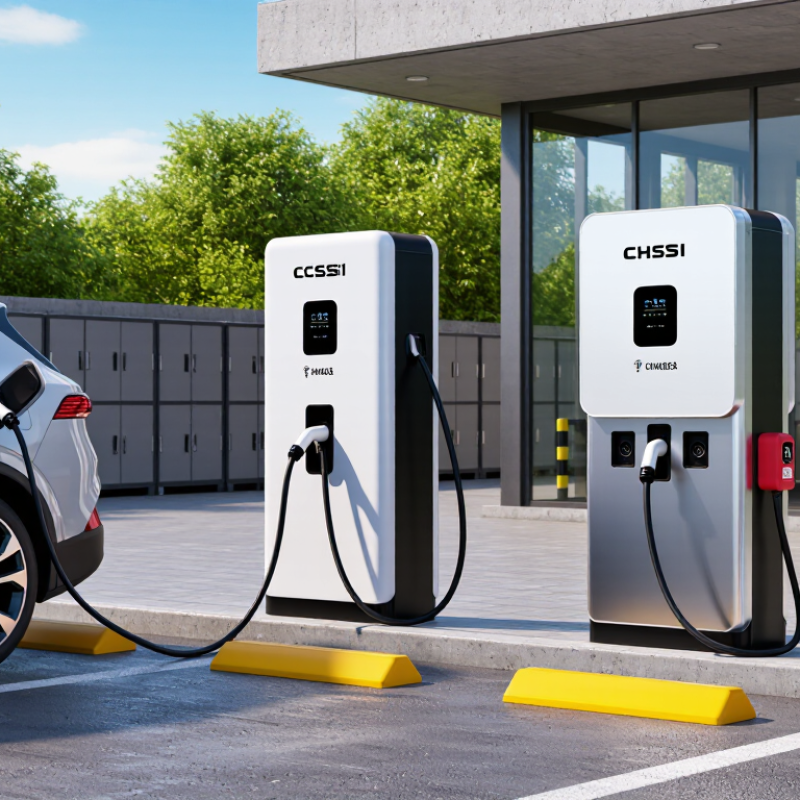
Choosing the right China Ev Charging station requires more than comparing factory prices. Global buyers must evaluate safety, compatibility, performance, documentation, and long-term service before placing an order. A charger may look impressive in a product photo, yet its connector, enclosure, or software may not suit your market.
Experienced buyers usually begin with local vehicle requirements. Check charging standards, input voltage, frequency, output power, and communication protocols. Confirm whether the unit supports CCS2, CCS1, CHAdeMO, GB/T, or another connector. Small details matter. A mismatched plug can stop an otherwise excellent project.
Ask suppliers for test reports, certification records, installation guides, and warranty terms. Reliable manufacturers should explain protection against overvoltage, overheating, leakage, and weather exposure. They should also provide clear information about IP ratings, operating temperatures, cable length, and emergency controls. Do not accept vague promises. Request sample units or live factory demonstrations when possible.
Software deserves equal attention. Buyers should verify remote monitoring, payment integration, load management, firmware updates, and data security. A charger that works today may become difficult to manage later. After-sales support is often overlooked, especially when the supplier is thousands of kilometers away. Confirm spare-part availability, response times, training, and local technical partnerships.
No selection process is perfect. Supplier websites can be polished, while actual support remains uncertain. Independent inspection, pilot installations, and reference checks reduce this risk. The best China Ev Charging solution balances technical fit, compliance, serviceability, and total ownership cost. Price matters, but reliability protects the investment.
Choosing China EV charging stations starts with the destination, not the equipment catalog. Define the target market, vehicle types, daily charging volume, and local grid conditions. Start with the site. A residential project may need 7–22 kW AC chargers, while highway corridors often require 60–240 kW DC systems. Fleet depots also need load management, overnight scheduling, and accurate energy metering.
Market data should guide the specification. The International Energy Agency reported more than 14 million electric cars sold globally in 2023, with electric models reaching nearly 18% of new-car sales. The same report recorded over 4 million public charging points worldwide. These figures show strong demand, but charging standards remain regional. Check connector types, voltage ranges, grid frequency, payment methods, and required safety certifications before requesting quotations. IEC compliance may support international deployment, but local approval remains essential.
Do not treat charging power as the only performance measure. A 180 kW unit may underperform on a weak grid or during simultaneous fleet charging. Review operating temperature, ingress protection, cable length, maintenance access, software protocols, and spare-part availability. OCPP support can improve system flexibility across different platforms. The U.S. National Renewable Energy Laboratory also links charging demand with travel patterns, dwell time, and electricity capacity, not charger count alone. A spreadsheet can still miss reality. Pilot testing in one target market may reveal payment failures, installation delays, or unsuitable power ratings before a larger purchase.
Choosing a China-made EV charging station starts with charger type. AC chargers, commonly rated from 7 to 22 kW, suit homes, offices, hotels, and long parking periods. DC chargers deliver power faster, often from 30 kW to over 350 kW. The right level depends on site capacity, parking time, and vehicle battery limits. More power is not always better.
Vehicle compatibility needs closer checking. Confirm the connector standard, such as GB/T, CCS, or CHAdeMO, before comparing prices. Check voltage range, current limits, communication protocol, and charging software support. A vehicle may accept a familiar plug but still charge slowly if its onboard system has a lower limit. Small details matter.
The International Energy Agency reported over four million public charging points worldwide at the end of 2023. Public charging stock grew by more than 40% that year, according to the Global EV Outlook 2024. This growth increases demand for reliable DC equipment, but local grid limits can delay deployment. A 180 kW charger may need costly electrical upgrades. That is easy to miss. The Global EV Outlook also highlights the importance of smart charging as EV adoption expands. Buyers should request independent test records, efficiency data, warranty terms, spare-parts plans, and certification for the target market. Field commissioning can reveal problems that brochures hide. Compatibility should be tested with several vehicle models, not one successful demonstration. Mistakes happen.
Compare charger types, power levels, and vehicle compatibility before selecting an EV charging station.
Note: The chart uses representative rated output values. Typical ranges are approximately 3.7–22 kW for AC charging, 50–150 kW for DC fast charging, and 150–350 kW for high-power DC charging. Actual charging speed depends on the vehicle's onboard charger, battery voltage, battery state of charge, connector standard, and local electrical infrastructure.
Global buyers should judge Chinese EV charging stations through evidence, not attractive specifications. The IEA’s Global EV Outlook 2024 reported about 3.6 million public chargers in China during 2023. This scale shows strong manufacturing experience, but volume alone does not prove reliability. Ask manufacturers for factory audit records, production traceability, and failure-rate data from comparable climates. Inspect cable flexibility, connector temperature, enclosure sealing, and emergency-stop performance.
Certifications must match the destination market. Check IEC 61851, IEC 62196, EMC, safety, and applicable national requirements. CE marking may support European sales, but it is not a universal quality guarantee. Request test reports from ISO/IEC 17025-accredited laboratories. Also verify software compatibility, including OCPP versions and ISO 15118 functions. The IEA notes that smart charging will become more important as electric vehicle adoption expands. Poor software support can make a good charger frustrating.
Tips: Compare samples, not brochures. Run a 30-day pilot. Measure uptime, charging output, connector heat, and remote fault recovery. Speak with existing operators, if possible. A certificate can still hide weak assembly or outdated firmware. No checklist is perfect. Buyers should leave room for inspection gaps, especially when suppliers provide polished documents but limited field evidence.
| Evaluation Dimension | Relevant Technical Benchmark | Typical Data or Requirement | Documents or Tests to Request | Buyer Acceptance Check | Common Risk Signal |
|---|---|---|---|---|---|
| Target Charging Use | AC charging and DC conductive charging are governed by different electrical and communication requirements. | Common AC product classes are approximately 3.7–22 kW. DC products commonly range from about 20 kW to 350 kW or more. | Application profile, rated-power sheet, load analysis, installation drawings, and site electrical requirements. | Rated output matches vehicle demand, grid capacity, parking duration, and local installation rules. | A single model is proposed without checking local voltage, frequency, climate, or fleet requirements. |
| Connector Compatibility | IEC 62196 series, GB/T 20234 series, and regional connector rules should be assessed according to the destination market. | CCS2 is widely used in Europe and many other markets; CCS1 is used in several North American applications; GB/T connectors are used in mainland China. | Connector specification, pin configuration, cable rating, mating-cycle data, and vehicle compatibility list. | Connector, inlet, cable, and communication protocol are compliant with the destination vehicles and regulations. | Use of mechanical adapters to solve a communication or electrical incompatibility. |
| Electrical Safety Design | IEC 61851 series, IEC 60364 installation principles, and applicable national electrical codes. | Protection should address overcurrent, overvoltage, residual current, short circuit, overtemperature, and protective earthing. | Type-test reports, schematic diagrams, protection-setting table, insulation-resistance results, and earth-continuity results. | Protection operates at the specified thresholds and resets safely after a fault or power interruption. | Generic safety statements without test conditions, measured values, or laboratory traceability. |
| International Certification and Market Access | CE requirements may involve the Low Voltage, EMC, and RoHS frameworks where applicable. UKCA, UL, CSA, or other national requirements may apply in other markets. | CE marking is generally supported by a Declaration of Conformity and technical documentation; it is not, by itself, a universal third-party safety certificate. | Declaration of Conformity, applicable directives or regulations, EMC report, safety report, RoHS evidence, and certificate scope. | The legal manufacturer, model number, tested configuration, standards edition, and destination market are clearly identified. | A logo is shown without a valid declaration, test report, product scope, or responsible economic operator. |
| China-Market Compliance Evidence | GB/T 18487.1 covers electric vehicle conductive charging system requirements; GB/T 20234 series addresses charging connectors and interfaces. | CCC applicability depends on the product category and current Chinese regulatory scope; it should not be assumed to apply to every charger. | Chinese test reports, applicable CCC evidence where required, standard-version declaration, and factory inspection records. | The documents correspond exactly to the supplied model, rated power, connector version, and production site. | A report covers a similar model but not the actual model or configuration being quoted. |
| Communication Protocol | OCPP is widely used for charger-to-backend communication; ISO 15118 supports advanced vehicle-to-charger communication where implemented. | Confirm the supported OCPP version, transport security, remote commands, firmware management, and ISO 15118 feature level. | Protocol conformance evidence, API documentation, cybersecurity statement, integration guide, and live-backend test results. | The charger completes authorization, start/stop, meter reporting, fault reporting, reservation, and remote reboot tests. | “OCPP compatible” is claimed without specifying the version or listing supported messages and limitations. |
| Ingress and Impact Protection | IEC 60529 defines IP protection ratings; IEC 62262 defines IK impact-protection classifications. | Outdoor installations commonly require a documented IP rating suitable for rain, dust, and cleaning conditions; the exact rating depends on the site design. | IP and IK test reports, enclosure drawings, gasket specifications, drainage design, and cable-entry details. | The tested enclosure configuration matches the production unit, including doors, connectors, displays, and cable glands. | The rating applies only to an empty enclosure or a laboratory configuration different from the delivered product. |
| Environmental Operating Range | Environmental limits should be verified through product specifications and relevant environmental test methods. | Check operating temperature, storage temperature, humidity, altitude, salt exposure, solar radiation, and condensation conditions for the installation site. | Environmental test plan, derating curve, thermal-management design, corrosion-protection specification, and altitude limitations. | Output remains within specification at the site’s worst-case temperature and grid conditions. | Only a nominal temperature range is provided, with no power derating or thermal-protection data. |
| Power Quality and Efficiency | Power-factor, harmonic-current, efficiency, and electromagnetic-compatibility performance should be evaluated against the destination grid requirements. | Request efficiency curves and power-factor data at multiple load points rather than relying only on a maximum-load value. | Efficiency test report, power-factor readings, harmonic-current measurements, standby-consumption data, and EMC report. | Measured performance complies with the purchase specification under defined voltage, frequency, and load conditions. | Efficiency is stated only at one ideal operating point or without test conditions. |
| Metering and Billing Accuracy | Metering requirements depend on the destination country, payment model, and legal-metrology rules. | Confirm whether the meter is revenue-grade, MID-approved where required, sealed against tampering, and synchronized with the backend. | Meter datasheet, calibration certificate, legal-metrology approval, accuracy class, and billing-data sample. | Energy records reconcile between the charger, backend, payment platform, and independent reference meter. | Billing capability is advertised without evidence that the meter is legally acceptable in the target market. |
| Factory Quality Management | ISO 9001 certification can indicate a documented quality-management system, but it does not replace product testing. | Evaluate incoming-material inspection, supplier control, process control, calibration, nonconformity handling, and traceability. | ISO 9001 certificate, audit report, process flow, inspection plan, calibration records, and corrective-action examples. | Serial numbers link the finished unit to key components, firmware, test results, and shipment records. | A management-system certificate is presented as proof that every product has passed independent safety testing. |
| Production and End-of-Line Testing | Electrical safety, functional operation, communication, thermal behavior, and output performance should be tested before shipment. | A complete test record should identify the unit, test date, test equipment, limits, measured results, and pass/fail status. | Factory acceptance-test procedure, sample records, equipment calibration certificates, and defect-repair statistics. | Buyer or third-party inspection confirms that the delivered configuration matches the approved sample. | Only a visual inspection or power-on demonstration is offered instead of documented electrical testing. |
| Reliability and Service Life | Reliability should be supported by accelerated-life, thermal-cycle, vibration, humidity, and connector endurance testing where applicable. | Connector mating-cycle capability, fan or pump service interval, replaceable-module design, and critical-component availability should be specified. | Reliability test plan, failure-rate data, preventive-maintenance schedule, spare-parts list, and field-service procedure. | The supplier provides measurable test conditions and a realistic plan for maintaining units after warranty expiration. | Unqualified claims such as “maintenance-free” or “lifetime operation” without test evidence. |
| Cybersecurity and Software Updates | Cybersecurity controls should cover authentication, encryption, access management, logging, vulnerability response, and secure updates. | Confirm TLS support, unique credentials, role-based access, signed firmware, backup and recovery procedures, and vulnerability-notification channels. | Cybersecurity architecture, penetration-test summary, software bill of materials where available, update policy, and data-hosting information. | Buyer controls administrator access, receives security updates, and can export operational data in a usable format. | Default shared passwords, unencrypted management access, or mandatory cloud dependence without data and service terms. |
| Warranty and Technical Support | Warranty terms should define coverage, exclusions, response time, replacement procedure, and software-support duration. | A written warranty commonly specifies a fixed period from shipment, commissioning, or acceptance; the contract must define the starting point. | Warranty document, service-level agreement, escalation contacts, spare-parts commitment, training plan, and remote-support process. | Support obligations remain enforceable after installation and include local-language documentation where needed. | Warranty is valid only if the buyer uses an exclusive service provider or purchases undefined subscription services. |
| Pre-Shipment and Site Acceptance | Acceptance should be based on the approved technical specification, applicable standards, and agreed test procedures. | Test at minimum: rated output, connector operation, insulation, protective-earth continuity, emergency stop, fault recovery, communications, and payment or backend integration. | Inspection checklist, FAT/SAT protocol, independent inspection report, punch list, and final configuration record. | Payment is linked to documented acceptance rather than shipment alone. | The contract contains no objective acceptance criteria or remedy for failed tests. |
| Total Cost of Ownership | Purchase price should be assessed together with installation, freight, import duties, software, energy losses, maintenance, spare parts, and downtime. | Compare expected operating cost over the planned service period, not only the initial equipment quotation. | Five-year cost model, efficiency assumptions, service pricing, spare-parts price list, software fees, and replacement lead times. | The selected solution delivers acceptable cost per delivered kWh while meeting safety and uptime requirements. | Low purchase price hides paid software, unavailable spare parts, high standby consumption, or expensive field service. |

Note: Certification and regulatory requirements vary by destination country, charger type, electrical rating, installation environment, and intended use. Always verify the latest requirements with the relevant authority or qualified conformity-assessment body before purchase.
Global buyers should judge China EV charging stations by field performance, not attractive screens. The IEA’s Global EV Outlook 2024 reports nearly 14 million electric cars sold in 2023. Public charging points exceeded four million worldwide, growing by over 40% that year. This pressure makes smart control essential. Look for OCPP compatibility, ISO 15118 readiness, dynamic load balancing, remote diagnostics, and secure user authentication. A clear dashboard should show connector status, energy use, faults, and session history. Fancy software is not enough.
Installation support often decides project success. Request a documented site survey covering transformer capacity, cable distance, grounding, drainage, and local electrical rules. Ask whether engineers provide drawings, commissioning, staff training, and multilingual troubleshooting. A charger may work perfectly in a factory test. Poor trench planning can still delay an overseas site for weeks. This is where buyers need evidence, not promises.
After-sales service should include firmware updates, spare-parts availability, remote response targets, and defined on-site repair times. The Uptime Institute’s data-center research repeatedly links downtime with weak processes and human error; charging networks face similar operational risks. Review service records and ask for anonymized failure statistics. A low purchase price can hide expensive support gaps. I would also test the support hotline before signing. Slow replies are a warning. The imperfect part is often ignored: software updates may interrupt sessions, and local technicians may need extra training. A realistic contract should state who fixes each problem, how quickly, and at whose cost.
Choosing China EV charging stations requires more than comparing factory prices. The real decision starts with landed cost. I usually build a worksheet covering equipment, inland transport, ocean or air freight, insurance, customs duties, taxes, port handling, and local delivery. Installation adds cable work, protection devices, civil construction, permits, and commissioning labor. A low quotation can become expensive after these items appear. It happens more often than buyers expect.
Import rules differ by destination and charger type. Confirm the correct customs classification before payment, then check electrical safety, electromagnetic compatibility, radio functions, cybersecurity, and grid connection requirements. Local authorities may request test reports, declarations, manuals, labels, or an authorized importer. A qualified customs broker and an independent electrical engineer can verify these details. Do not rely only on a supplier’s statement. Documents may look complete while one local requirement remains missing. I once underestimated translation and inspection costs; the delay was small, but the storage bill was not.
Long-term value depends on uptime, energy efficiency, software compatibility, spare-part access, warranty response, and technician training. Calculate expected charging sessions, electricity losses, payment fees, maintenance visits, and replacement parts over five to ten years. Compare cost per delivered kilowatt-hour, not just cost per unit. Ask how faults are diagnosed remotely and how quickly critical parts can arrive. Also test the connector, cable length, enclosure rating, and operating temperature against the real site. A perfect model on paper may perform poorly in dust, heat, or winter. Leave room for uncertainty; demand forecasts are rarely perfect.