2026 Top Solar Installation Types for Global Buyers

Choosing the right solar installation has become a practical priority for global buyers in 2026. Energy prices, grid reliability, land availability, and climate conditions vary widely between markets. A rooftop system may suit a warehouse in Germany, while a ground-mounted array may work better for a rural business in Australia. Solar carports, floating solar, and hybrid systems also deserve careful attention.

This guide compares the leading installation types through practical buying factors. These include energy output, roof structure, land use, maintenance access, battery compatibility, permitting, and long-term operating costs. Experienced developers do not judge a system by panel count alone. They examine shading at different hours, local weather records, roof loading, cable routes, and the quality of the inverter. Small details matter. A poorly planned cable path can increase maintenance work for years.

Reliable decisions also require qualified installers, documented warranties, transparent production estimates, and compliance with local electrical requirements. Buyers should verify company experience, project references, product certifications, and after-sales support before signing a contract. Manufacturer claims can be useful, but they are not independent proof. Site data remains more persuasive.

There is no universal best option. That assumption often fails. A floating project may reduce land pressure but face water, anchoring, and maintenance challenges. A rooftop system may be affordable but limited by orientation or structural weakness. Even professional forecasts contain uncertainty, especially where weather data is incomplete. This overview helps global buyers compare realistic choices, question optimistic promises, and select a solar installation that fits their site, budget, and energy goals.
2026 Top Solar Installation Types for Global Buyers

Solar Installation Types: A Basic Classification for Global Buyers

2026 Top Solar Installation Types for Global Buyers

Solar Installation Types: A Basic Classification for Global Buyers

Solar systems usually fall into four practical categories: residential rooftop, commercial rooftop, ground-mounted utility, and specialized installations. This classification helps buyers compare space, output, maintenance, and approval requirements. In its Trends in Photovoltaic Applications 2024 report, IEA PVPS estimated 456 gigawatts of new photovoltaic capacity in 2023. The global market is already massive.

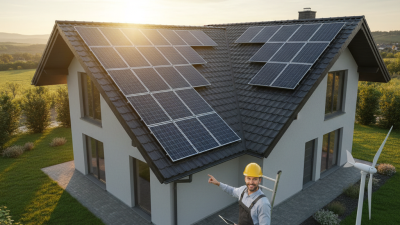
Residential rooftop systems suit homes, small buildings, and remote properties. They typically use limited roof space and may pair with batteries for evening demand. Commercial and industrial rooftops support larger daytime loads, such as refrigeration or machinery. Roof condition matters more than many buyers expect. A weak roof can turn a low-cost project into a structural problem.

Ground-mounted systems provide large-scale generation on available land. They need fencing, drainage planning, grid access, and careful environmental review. Floating solar uses reservoirs and can reduce land pressure, but anchoring and water conditions require specialist assessment. Agrivoltaic systems combine crops with elevated panels, although their results vary by climate and farming method. Off-grid systems serve locations beyond reliable grids, often using batteries and backup generation. They are not always cheaper.

IRENA’s Renewable Capacity Statistics 2024 recorded about 1,419 gigawatts of global solar capacity at the end of 2023. Its figure differs from IEA PVPS estimates because reporting methods and project coverage are not identical. That difference deserves attention. Buyers should verify local irradiation, tariffs, permits, fire rules, warranty terms, and service capacity before comparing quotations.

Rooftop Solar Systems for Homes, Businesses, and Industrial Buildings

Rooftop Solar Systems for Homes, Businesses, and Industrial Buildings

Rooftop solar has moved from a niche upgrade to a mainstream energy option. IRENA reported 1,419 gigawatts of global solar capacity by the end of 2023. The IEA recorded nearly 420 gigawatts of new solar PV additions during 2023. Much of this growth comes from distributed systems on buildings.

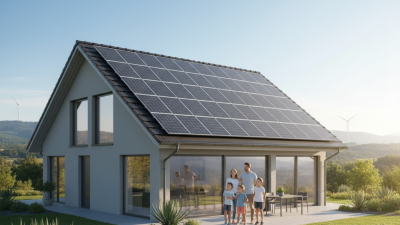
Homeowners usually choose compact systems for daytime electricity and long-term bill control. A typical design includes panels, an inverter, mounting rails, protection devices, and optional battery storage. Roof direction, shading, structural strength, and local grid rules matter more than panel count. A beautiful roof can still perform poorly.

Businesses often gain stronger value from daytime generation. Offices, warehouses, schools, and retail buildings consume power while the system produces it. Industrial rooftops can support larger arrays, but engineering checks become more demanding. Roof age, wind loading, fire access, drainage, and maintenance routes require documented review. The IEA PVPS Trends 2024 report highlights the continuing expansion of distributed PV markets, although market conditions differ widely between countries.

Production estimates are never perfect. Dust, heat, unexpected shade, and inverter clipping reduce output. Buyers should request conservative simulations using local weather data, not attractive annual guesses. Battery storage may improve resilience, but it can add cost and replacement planning. I have seen projects overbuilt for impressive capacity, while simple load analysis would have produced a better fit. A careful site survey remains essential.

Ground-Mounted Solar Farms for Utility-Scale Power Generation

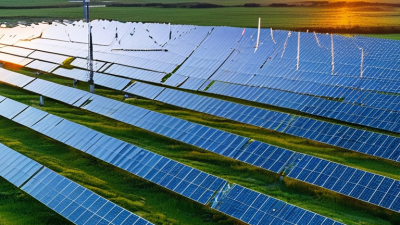
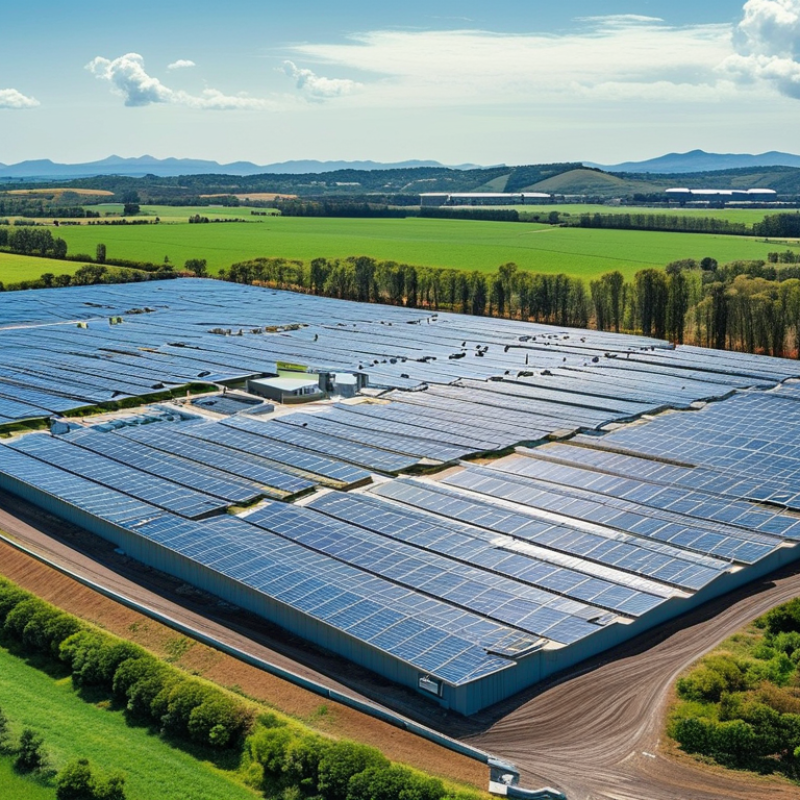
Ground-mounted solar farms remain the leading option for utility-scale power generation in 2026. They use open land, standardized layouts, and easier maintenance access. IRENA’s Renewable Capacity Statistics 2025 reports that global solar capacity reached about 1,865 GW by the end of 2024. This scale reflects strong demand for large projects. It also exposes weaknesses in land planning, transmission access, and local permitting.

A practical site needs strong soil, controlled drainage, and nearby grid capacity. Fixed-tilt structures may suit stable climates and simpler maintenance plans. Single-axis tracking can improve energy yield, but it adds moving parts and maintenance risks. The International Energy Agency’s Renewables 2024 analysis expects solar PV to provide most new renewable capacity through 2030. Buyers should therefore compare annual energy output, not only the panel area or purchase price.

Details matter. A gravel service road can reduce mud during inspections. Wind studies should examine seasonal gusts, not only average speed. NREL’s 2024 utility-scale solar cost benchmarks show that equipment represents only part of total project costs; labor, development, financing, and grid connection remain important. The model is useful, but not complete. A low bid can conceal weak geotechnical work or delayed interconnection. Buyers should request measured performance assumptions, drainage drawings, warranty terms, and independent yield assessments before signing. погодные extremes are becoming harder to model. That uncertainty deserves a contingency.

Floating Solar Installations for Water-Based Sites

Floating solar installations are becoming a practical option for water-based sites in 2026. They use floating platforms to support photovoltaic panels on reservoirs, irrigation ponds, and selected industrial lakes. This approach can preserve valuable land for farming or other activities. It may also reduce surface evaporation in dry regions, although performance depends on local weather and water conditions.

A reliable project begins with a detailed site assessment. Engineers should examine water depth, seasonal level changes, wind exposure, wave movement, and shoreline access. Anchoring systems must tolerate changing loads without damaging the reservoir structure. Electrical equipment needs suitable protection against humidity, corrosion, and accidental contact with water. The setting matters. A calm inland reservoir requires different engineering from a windy coastal basin.

Global buyers should also request clear maintenance plans and independently verified performance data. Regular inspections can identify loose connectors, damaged floats, algae buildup, and cable wear. Water quality monitoring is essential when installations operate near drinking-water sources. Environmental reviews may reveal effects on birds, aquatic plants, or recreational use. No design is perfect. Some projects underestimate access difficulties during repairs, while others rely too heavily on predicted energy yields. A careful supplier should explain these limits, provide realistic production estimates, and document installation experience across comparable climates.

2026 Top Solar Installation Types for Global Buyers - Floating Solar Installations for Water-Based Sites

Comparative guide to common floating photovoltaic installation types and their practical deployment conditions

Installation type Best-fit water site Indicative project scale Typical water-surface coverage Common anchoring approach Primary advantages Main design considerations Buyer suitability
Reservoir floating solar Drinking-water, irrigation, or multipurpose reservoirs with limited shoreline availability Approximately 1–100+ MWp, depending on reservoir size and grid capacity Usually around 5–15%; project limits may be lower where water-use conflicts exist Perimeter mooring connected to shore anchors, deadweights, or submerged anchors Uses existing water surfaces, reduces land acquisition, and can complement nearby substations or hydropower assets Water-level variation, wave loading, navigation corridors, water quality, and public-safety requirements Large utilities, water authorities, infrastructure investors, and public-sector buyers
Hydropower-reservoir floating solar Existing hydropower reservoirs with available transmission capacity Generally 10–200+ MWp for large reservoirs, subject to grid and environmental approvals Typically a controlled fraction of the reservoir; often assessed below 10% during early planning Heavy-duty mooring and anchoring designed for seasonal water-level changes and stronger wind exposure Combines daytime solar generation with dispatchable hydropower and may improve transmission utilization Hydrological fluctuations, high wind fetch, dam-operation rules, electrical interconnection, and access logistics Utility-scale buyers and owners of existing hydropower infrastructure
Quarry-lake floating solar Flooded mineral quarries, sand pits, and former extraction sites with deep, unused water areas Approximately 1–50 MWp, depending on lake geometry and available connection capacity Often 5–20%, with exclusions for steep banks, ecological zones, and operating areas Submerged anchors, bank anchors, or hybrid systems selected after bathymetric and geotechnical surveys Reuses post-industrial land and water assets while avoiding competition with agricultural land Deep water, irregular shorelines, limited road access, steep banks, water chemistry, and difficult maintenance access Private developers, former quarry owners, municipalities, and land-reuse projects
Irrigation-pond floating solar Agricultural storage ponds, canal-fed reservoirs, and farm irrigation basins Approximately 100 kWp–10 MWp, depending on pond area and local electricity demand Commonly 10–40%; coverage should preserve pumping, maintenance, and water-management access Bank anchors, concrete deadweights, or modular mooring systems suited to shallow water Can offset irrigation-pumping electricity, reduce evaporation in suitable climates, and preserve productive land Small water area, sediment, farm equipment movement, seasonal water levels, and limited electrical infrastructure Agricultural operators, irrigation districts, and distributed-energy buyers
Wastewater-treatment-pond floating solar Treated-water lagoons, polishing ponds, and selected municipal or industrial wastewater basins Approximately 100 kWp–20 MWp, based on treatment-plant load and available pond area Usually 5–25%; process access, aeration zones, and regulatory limits must remain unobstructed Bank anchoring or isolated mooring systems designed to avoid interference with liners and treatment equipment Generates power near a continuous electricity load and may reduce direct sunlight and surface disturbance in selected ponds Corrosive or biologically active environments, gas management, liner protection, hygiene, and operator access Municipal utilities, industrial facilities, and water-treatment operators
Industrial process-water floating solar Cooling-water ponds, settling basins, and process-water storage areas at industrial sites Approximately 500 kWp–30 MWp, depending on industrial demand and site boundaries Typically 5–20%, subject to process, safety, and water-quality requirements Engineered bank, deadweight, or submerged anchoring with additional protection against industrial traffic Produces electricity close to the load and can reduce pressure on constrained industrial land Chemical exposure, hot-water discharge, restricted access, fire safety, and compatibility with plant operations Industrial energy users and on-site generation projects
Canal-top solar Irrigation and water-transfer canals where structural clearance and maintenance access are feasible Approximately 100 kWp–20 MWp per connected section or canal program The panels cover the canal corridor rather than a conventional open-water surface Usually supported by bankside structures, bridges, or engineered spans rather than floating moorings Can reduce solar exposure on the canal, limit evaporation in dry climates, and use existing linear infrastructure Higher structural cost, canal-width constraints, cleaning access, wind uplift, and interference with water operations Water agencies, irrigation districts, and infrastructure owners with long, accessible canal networks
Planning note: Capacity and coverage figures are indicative planning ranges, not fixed design limits. Final sizing requires bathymetric surveys, wind and wave studies, water-level analysis, geotechnical investigation, environmental review, electrical-interconnection assessment, and confirmation of water-use regulations.

Choosing the Right Solar Installation Type for Local Conditions

2026 Top Solar Installation Types for Global Buyers

Choosing the right solar installation starts with local conditions, not product popularity. IRENA’s Renewable Capacity Statistics 2025 recorded 451.9 GW of new solar capacity in 2024. Solar represented about 77% of all renewable additions. Rooftop systems suit cities with expensive land and reliable grids. Ground-mounted systems work better where land, access, and transmission capacity are available. Floating solar can reduce land pressure, but water quality and anchoring require careful study.

Climate changes the design. The Global Solar Atlas shows major differences in solar irradiation between regions. Hot climates may need higher ventilation and dust-resistant maintenance plans. Coastal sites need corrosion protection. Snow regions require stronger structures and steeper tilt angles. The IEA PVPS Trends 2024 report highlights the growing role of distributed photovoltaics, yet grid connection remains a practical barrier. A perfect design on paper can still fail locally. That deserves honest review.

Tips: Measure roof load, shading, wind, and annual electricity use before choosing a system. Request at least one professional yield simulation using local weather data. For weak grids, compare battery storage with a hybrid installation. Check water-level variation for floating projects. Small details matter. Buyers should also verify installation qualifications and electrical compliance with local authorities. I would not rely on one supplier’s forecast alone; independent engineering review can expose optimistic assumptions.

2026 Top Solar Installation Types for Global Buyers

Choosing the Right Solar Installation Type for Local Conditions

The chart compares indicative space requirements for common solar installation types at 1 MWp of capacity. Rooftop systems make efficient use of existing structures, fixed-tilt ground systems are suitable for open land, single-axis trackers can improve output in high-irradiance regions but require more spacing, and floating solar is useful where suitable water surfaces are available.

Indicative planning values: actual requirements vary with module efficiency, row spacing, tilt angle, terrain, access roads, setbacks, inverter layout, and local regulations. Reference basis: common utility-scale PV engineering ranges reported in international solar project planning practice.